Geography@Barnehurst
Subject Intent
At Barnehurst, Geography ensures that our children are equipped with strong substantive knowledge about the world, and the disciplinary knowledge to think, work and apply like geographers. We value both: the core knowledge children need about places, patterns, processes and environments, and the disciplinary thinking that enables them to interpret, investigate, and question the world around them.
Our curriculum aims to provide a meaningful sense of place, enabling children to engage emotionally and critically, sharing their opinions and responses to geographical issues and enquiries across a variety of scales. We ensure children understand the relevance of geography to their own lives and the global community, preparing them to act as informed and responsible Global Citizens. 
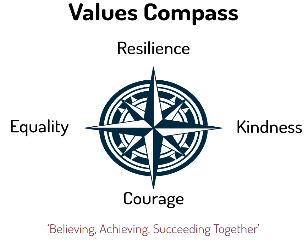
Geography at Barnehurst is rooted in our vision of harnessing the ‘Power of Me’ to unleash the ‘Power of We’, empowering children to recognise their impact in the world. This aligns with the Sustainable Development Goals and our whole-school ethos of equality, kindness, courage, and resilience.
Our geography knowledge and skills progression is underpinned by the National Curriculum and incorporates selected outcomes from the Global Goals for Sustainable Development. Children will meet the expected outcomes by the end of each Key Stage (KS1, LKS2, UKS2).
We use the ‘Disciplinary Knowledge in Geography’ planning document to support teachers in explicitly developing pupils’ disciplinary knowledge. This includes understanding how geographers ask questions, collect and interpret data, use evidence to support arguments, and make decisions. Teachers plan for enquiry, debate, and fieldwork experiences which progressively deepen pupils’ ability to think geographically.
Our curriculum is framed by the 7 Big Ideas or key concepts of Geography: Place, Space, Scale, Environment, Interconnections, Cultural Awareness, and Environmental Impact. These provide a schema for geographical substantive knowledge for our units, ensuring children make connections and build a deep understanding over time.
Lessons connect prior learning through carefully selected flashbacks on knowledge organisers and through schema-based review tasks. Teachers model subject-specific vocabulary and questioning, and scaffold learning with small, purposeful steps. Children are expected to broaden their academic and geographical vocabulary from EYFS to Year 6.
In EYFS, the Geography curriculum falls under the ‘Understanding the World’ strand, laying foundations in Graphicacy, Fieldwork, Enquiry and Placemaking. Schemas from the Big Ideas—particularly Place, Space, Scale, and Cultural Awareness—are introduced through explicit teaching, continuous provision, and high-quality play-based learning experiences. These become more abstract as children progress to meet the ELGs.
Throughout the school, children develop fieldwork skills, including data collection, analysis, interpretation and forming conclusions. These are fundamental elements of disciplinary knowledge and are integral to each phase of the curriculum.
 Geography lessons also promote SMSC, enriching children’s understanding of themselves and others in a changing world. Our children engage in responsible discussion of social, moral, and ethical issues in the local and wider context. They build resilience, empathy and understanding of diversity through geographical comparisons and collaborative learning.
We strive to instil in our pupils a sense of awe and wonder about the natural world. Our geography teaching invites them to ask "why?", to explore and be curious, and to develop a lifelong interest in the planet we share.
Subject Implementation
At Barnehurst, Geography is delivered through standalone units aligned to the National Curriculum and tailored to include one extended environmental enquiry per year group, linked to a focused Global Goal. This design ensures full coverage and depth, supporting both substantive and disciplinary knowledge acquisition.
In EYFS, Geography is woven through the year via planning for inputs, enhanced provision, and adult-facilitated opportunities that promote enquiry, placemaking, and exploration.

In Key Stage 1, children revisit EYFS foundations, building on local understanding before progressing to regional and global perspectives. Year 1 covers three 5–6 week units. In Years 2–6, pupils study two 6-week units and one extended environmental study, often rich in mapping and fieldwork opportunities.
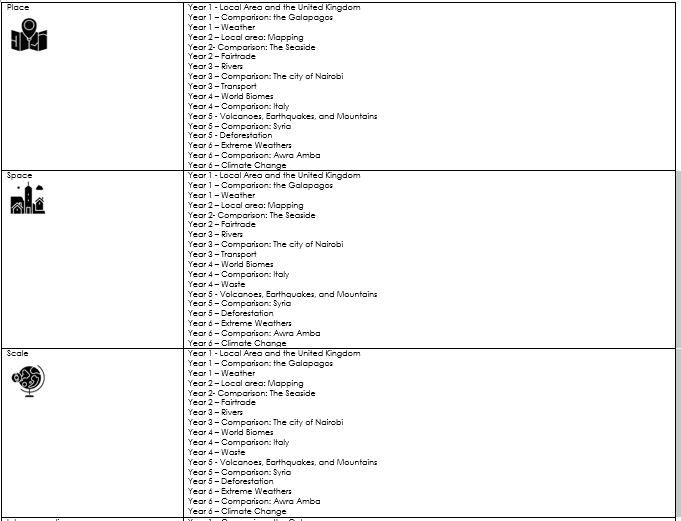
The geography curriculum is carefully sequenced to support cumulative knowledge and skill-building. Lessons are framed by the 7 Big Ideas (Leading Primary Geography, GA 2019), ensuring coverage of substantive knowledge, and structured through our disciplinary knowledge progression, which guides teachers in planning enquiry-based and fieldwork experiences.
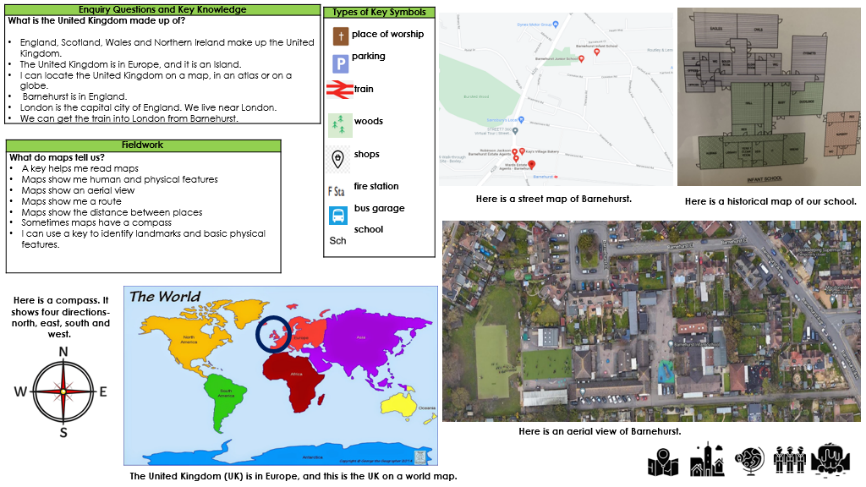 Children explore key topics like Rivers (Y3), Biomes (Y4), and Extreme Weather (Y6), alongside units focused on sustainability, local-global comparison, and mapping. Activities are designed to encourage autonomy, allowing pupils to apply what they know, ask questions, and engage critically with information.
Teachers model high-quality vocabulary and questioning and use knowledge organisers and our Schemas/ Disciplinary Knowledge document to plan for precise vocabulary instruction, conceptual connections, and targeted assessment. These tools also guide the use of ‘flashback’ strategies to secure long-term memory and build schema.
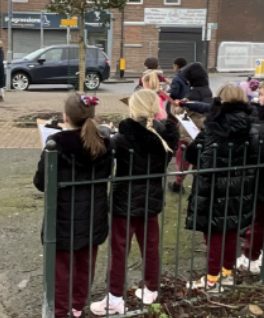
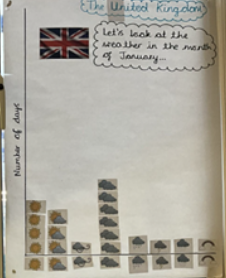

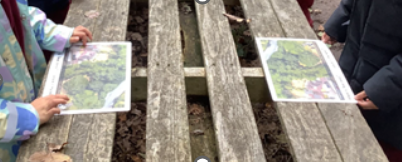
Fieldwork and enquiry are embedded across all year groups. EYFS and Year 1 children engage in hands-on placemaking and observation tasks, while older pupils undertake structured investigations involving data collection, analysis, research and presentation of findings.


Digital tools, including Showbie and mapping technology, are used to extend geographical understanding and promote engagement with real-time geographical data and visual resources
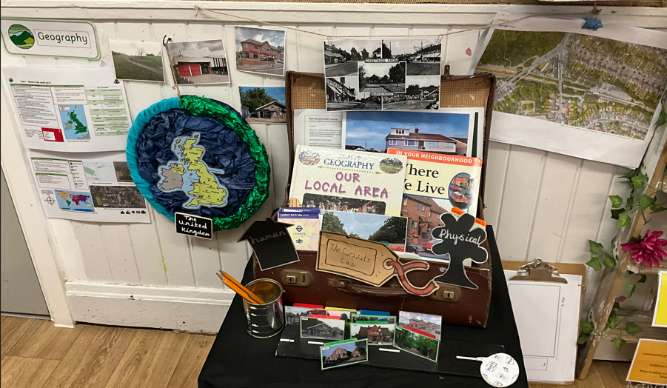
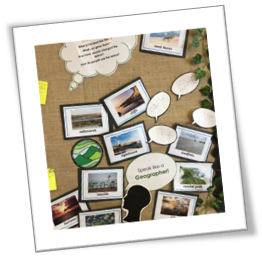
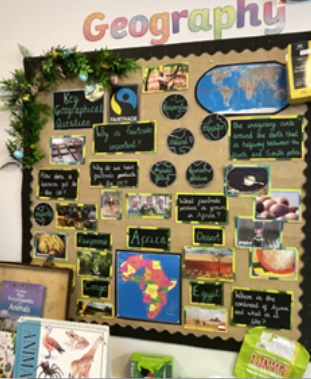
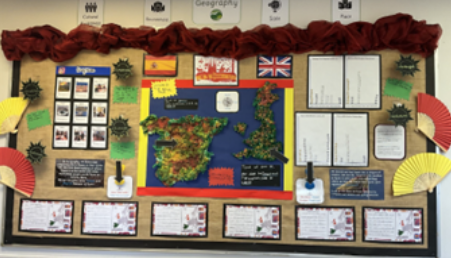
Displays and classroom environments across the school reflect our high expectations for vocabulary use, geographical representation, and the celebration of diverse places and cultures.
Impact
eachers assess Geography through our Wider Curriculum Assessment documents following each unit. Assessment is based on the Geography schemas/ building blocks (substantive outcomes) and Disciplinary Knowledge outcomes, as planned and taught in the units.
Assessment reflects both what pupils know (substantive knowledge) and how they think, work and apply it (disciplinary knowledge)—how well they can investigate, question, justify opinions, and use fieldwork data.
As a result of our geography curriculum, by the time children leave Barnehurst they will:
-
Have a growing and secure knowledge of the world and a personal sense of place.
-
Be able to think and act like geographers, using enquiry skills, evidence, and critical thinking.
-
Use a broad and accurate vocabulary of geographical terms and concepts.
-
Demonstrate disciplinary thinking, using evidence to form and justify viewpoints.
-
Be curious, responsible global citizens with a strong moral compass.
-
Show awe and wonder for the natural world and a desire to explore and protect it.
-
Be equipped with geographical skills including map work, fieldwork, evaluation, and problem solving.