RSHE@Barnehurst
Intent
At Barnehurst, we strive to prepare our children for the rich, diverse and sometimes challenging experiences that they may face now as children and then in the future as they move into adulthood. It is important that our children understand themselves, both emotionally and physically and by developing an understanding of themselves, they can understand the importance of showing other people respect. We believe that Relationship, Sex and Health Education enables children to understand what good relationships are like and how to keep them, know how their bodies change and feel as they grow, develop as sense of awe and wonder at the creation of new life and how to nurture emotional and physical health. We want our children to  become healthy, independent, confident and responsible members of society, now and in the future. Through our Global Citizenship curriculum at Barnehurst, we celebrate diversity and teach the children that all people are different. Our teaching of RSHE lets our children see that we are all individuals and that everyone, no matter what their background, ethnicity or gender identity, has an important role to play within our society.
Implementation
RSHE is taught throughout the school from Nursery to Year Six. In the Early Years RSHE is taught within the area of learning of Personal and Social Development. The children develop their personal and social skills through lessons taught, discussions that are had everyday and through the continuous provision. Personal, social and emotional development is one of the three Prime Areas in the Statutory framework for the early years foundation stage. The early learning goals (ELG) below summarise the knowledge, skills and understanding that all young children should have gained by the end of reception year.
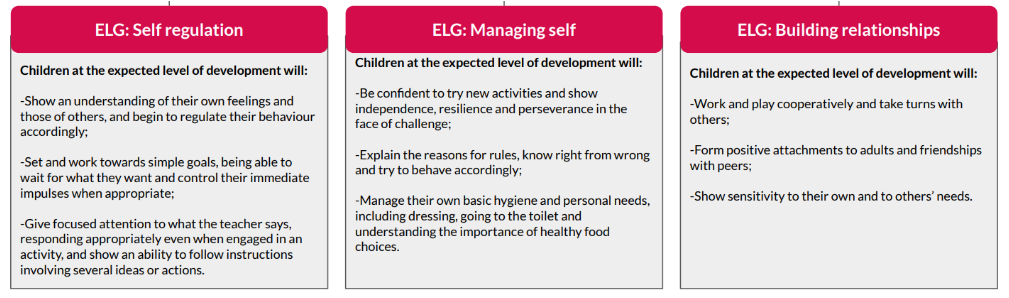
These are the foundations that the teaching and learning throughout the rest of the school are built upon.
At Barnehurst we use a scheme called Kapow to teach children RSHE. Kapow Primary is an online resource designed to help educators deliver specialist subjects with confidence. We use it solely for teaching RSHE. It assists schools to create consistency across the curriculum area. It provides staff with lesson plans, resources and tutorial videos to give everyone the confidence and skills to teach RSHE and match the statutory requirements.
Kapow has lessons that are used within reception, although these are not the only lessons taught. It is our main resource used from year one to year six.
Kapow Primary's RSHE scheme takes a spiral approach to the curriculum and therefore these areas will be revisited and further developed in the subsequent year group. Pupils revisit the five key areas throughout KS1 and KS2. Each time a key area is revisited, it is covered with greater depth and increasing maturity. Upon returning to each key area, prior knowledge is utilised so pupils can build on previous foundations, rather than starting again.
The five units (six in Keystage Two) each contain six to eight lessons lasting around 45 minutes. Year groups in KS1 and KS2 begin with an introductory lesson to familiarise pupils with RSHE as a subject and help them create an effective learning environment. Within this lesson the class and their teacher would establish some ‘Ground Rules’ or ‘Golden Rules’ as they are sometimes known. At the start of each RSHE lesson, the teaching staff remind the children of the ‘Ground Rules’ or ‘Golden Rules’ for the RSHE. These rules would include listening to others, respecting what other people say, not using unkind words or gestures when someone has shared their thoughts and ideas, not making others feel uncomfortable when sharing, asking questions if you don’t understand something is okay and so on. During the lesson these would be displayed on the board at the front of the class, on the floor in the middle of the circle, if that is how the children are sitting or a large copy of the rules are distributed and placed in the middle of each table.
An example of the types of ‘Ground Rules’ or ‘Golden Rules’ can be seen below.

Pupils end with a transition lesson to prepare them for the changes and challenges of moving to the next year group.
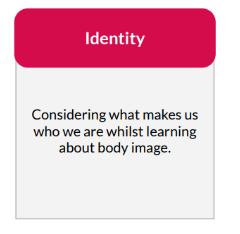
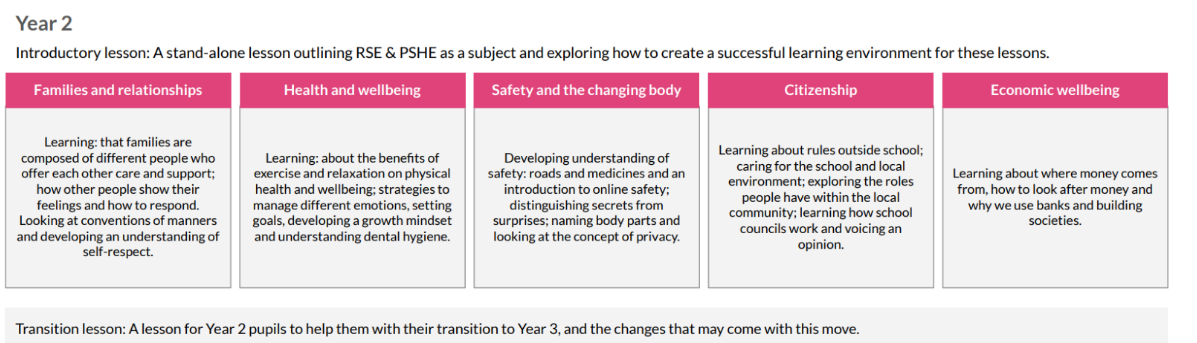
Kapow has categorised their lessons into the five key areas below, which are revisited in each year group, making pupil’s prior and future learning clear and shows how what you are teaching fits into their wider learning journey. Year 6 also have a further key area: Identity.
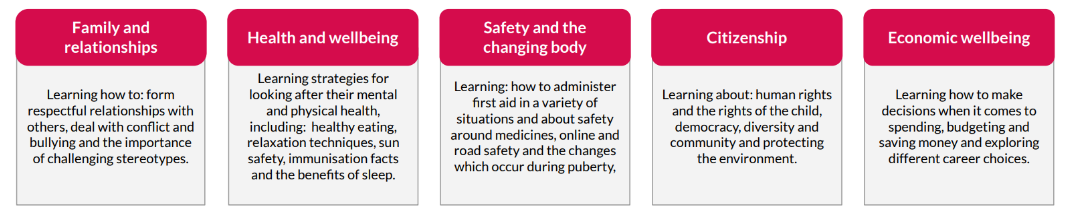
For Year Six only…
Kapow has a Long Term plan that gives an overview for each year group and teachers can not only see exactly what they are teaching, but what was taught the year before and what will be taught the year after. There are unit summaries for staff to see what has been taught at a glance and then links to all of the lessons.
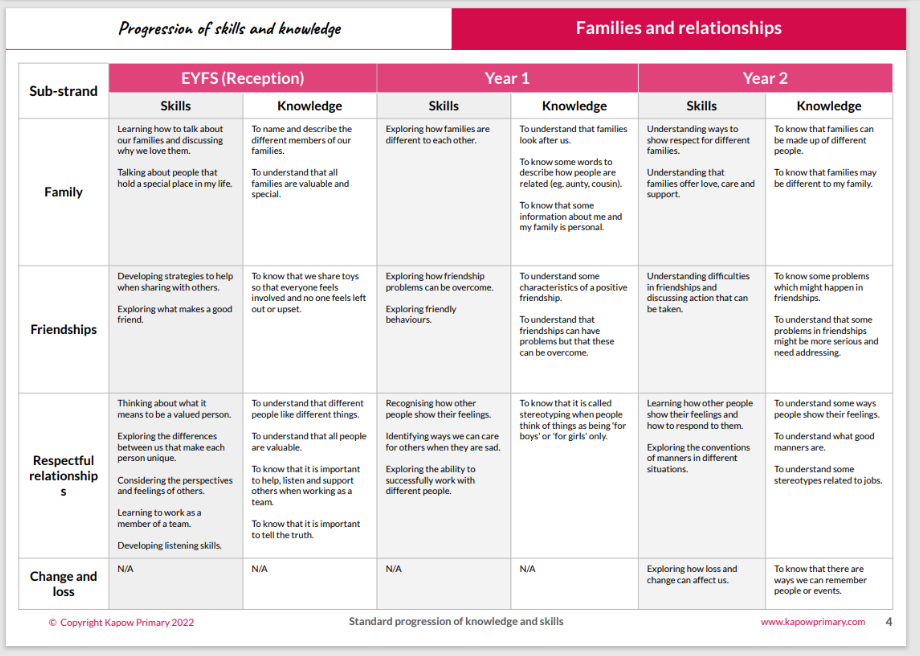
Kapow also provides a summary of skills and knowledge for each year group so it is clear what skill has been taught and the knowledge gained.
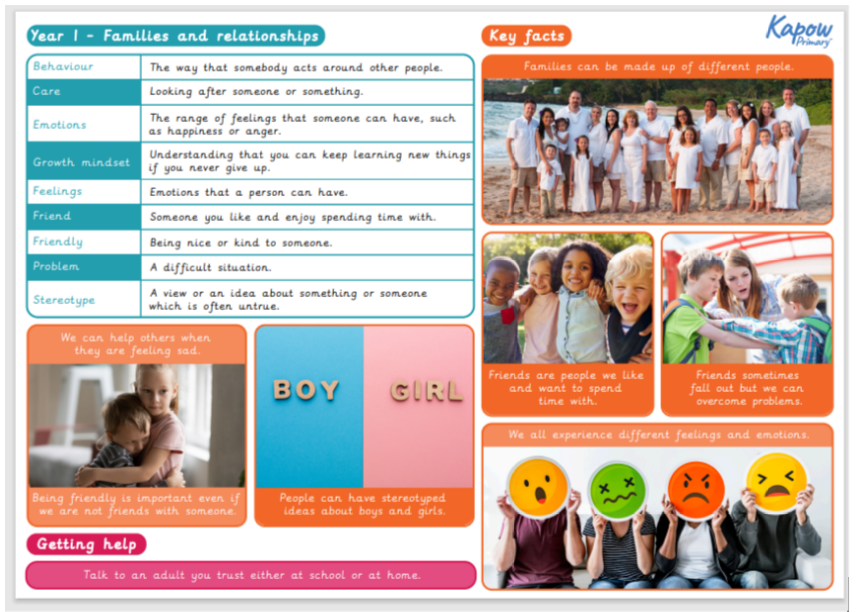
Each unit has a Knowledge Organiser which has been created by Kapow for the children to use. A Knowledge Organiser is a go-to document for a topic/unit of work: each one identifies the key information that children need to have learned by the end of a topic. It also acts as a tool to support children in retaining and retrieving knowledge for life-long learning. The Knowledge Organiser is downloaded onto the children’s Showbie account so that it can be referred to during the lesson and the children have access to it.
Our high expectations of behaviour, interpersonal relationships, respect and tolerance of others reflect the British Values upheld in both our community and the wider world. Through our rigorous and progressive curriculum, children develop key skills and are prepared for the wider world beyond primary school, a world in which they can keep themselves safe and healthy and thrive with the support of the positive relationships they forge with those around them.
Link to RSHE government guidance
We feel that it is important that our parents are aware of what is delivered during RSHE sessions so that they feel prepared to support and answer any further questions children might have at home.
We have lots of curriculum enhancement opportunities within our school community linked to RSHE.
Assemblies are one way that we provide further opportunities to explore RHSE themes, enabling children to grasp a deepening understanding of subjects. They get a sense of enjoyment and fascination in learning about themselves, others and the world around them. They develop the ability to recognise the difference 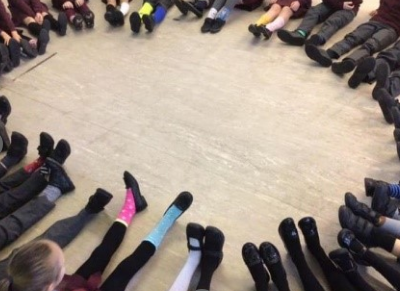 between right and wrong and begin to apply this understanding to their own lives. Our assemblies also develop the children’s understanding of the consequences of their behaviour and actions and link closely to our School Values.
Some of the RSHE themes covered within our assemblies would be ‘Anti bullying’ where we explore what it feels like to be bullied, what bullying is, why people sometimes become bullies and what we can do if we or someone else we know is being bullied. Our assemblies explore keeping ourselves safe, for example, we have an assembly to promote ‘Sun Safety’ and explain the importance of protecting ourselves from the sun. We also explore relationships through our assemblies and we will focus on topics such as LBGTQ plus month.
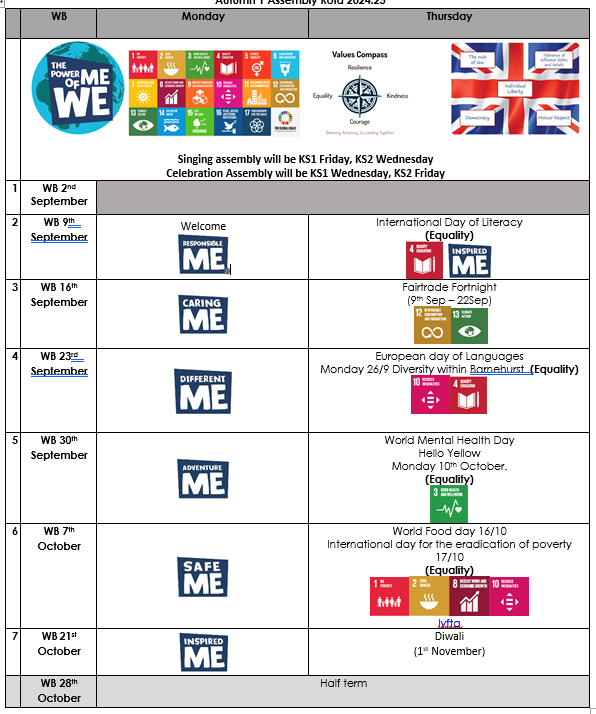
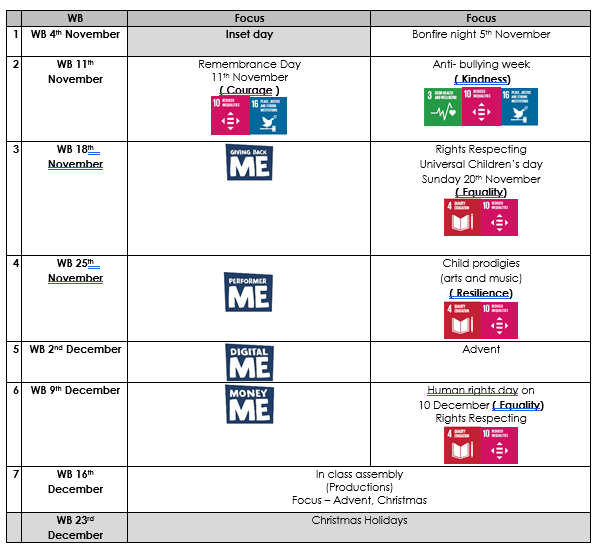
In addition to our lessons and assemblies, we have themed weeks which also support the teaching of RSHE such as ‘Anti Bullying Week’ and ‘Bikeabilty’ where we have qualified cyclists who teach the children in year six how to ride their bikes safely on the road. We also use outside agencies and the resources that they provide to support the teaching and learning within RSHE. For example, we use the NSPCC’s Speak Out and Stay Safe resources and where possible have speakers from the NSPCC to work with the children and we have an outside provider teach the children basic first aid.
To ensure that our parents are fully informed as to what their children will be learning, especially in years five and six when the children have a week during the Summer Term focusing on Sex Education, we hold a parent information session to discuss our processes and the content that will be covered and this gives parents the opportunity to learn more about the lessons.
At the end of each half term the teaching staff complete a Wider Curriculum Assessment Sheet reflecting on how children are progressing towards the building blocks within RSHE. The teachers make this judgement based on the observations they have made about the children during the RSHE discussions and follow up work that they complete. Once the teaching staff have submitted their Assessment Sheets, the Subject Leader will then complete a data report at the end of each term to highlight implications for further learning.
In the Classroom
To ensure consistency throughout the school when teaching RSHE and so that all children are clear as to what is being taught and our expectations within that lesson, we have some essential components to each lesson. The lesson begins with the RSHE logo being displayed on the board and the children are not in any doubt about the subject that they will be taking part in.
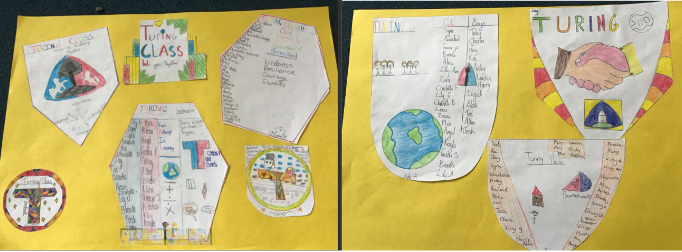
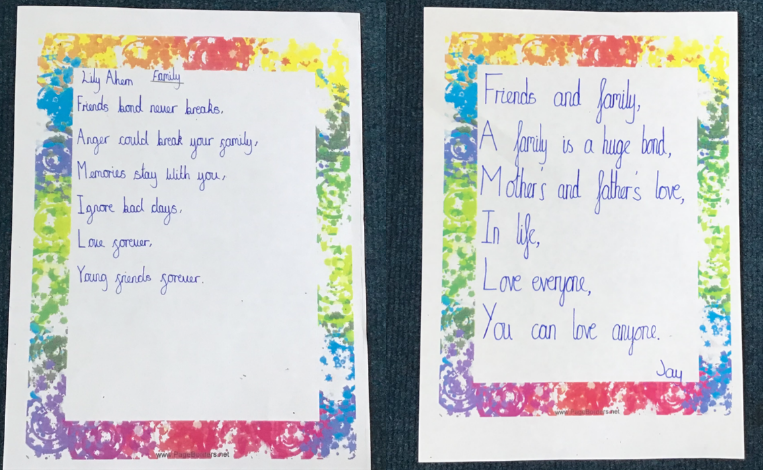
Within the RSHE lessons throughout the school there is often the opportunity for follow up work to bring together the children’s ideas. This work can be in the form of posters or leaflets that the children might produce in groups or individually. The children might be encouraged to write poems, produce pieces of artwork or take part in some drama. Year six have been thinking about the idea of ‘Belonging’ and exploring belonging to a class community and belonging to a family. Here are some examples of their fantastic work. Below are some shields that the children created to represent their class.